How ChatGPT, Claude, Gemini and PMM Sherpa compare on GTM judgement (Oct 2026)?
How they compare on usefulness for real world application and decision making?

Let's address the obvious first. ChatGPT, Claude and Gemini are the heavyweights. Thousands of brilliant people build them, they get better every quarter, and you almost certainly pay for at least one already. So a fair question is why you should spend ten minutes reading about another marketing tool, let alone trying one.
Here is the honest answer. We are not claiming to have a better model. We use the frontier models ourselves, under the hood. What we are claiming is narrower: on the specific work a product marketer does, a focused advisor with a curated library and a point of view gives you answers you can use faster, with fewer invented facts. That is a testable claim. So we tested it, blind, and published every answer, including the round we lost.
If the claim holds, it is worth ten minutes and a free account. If it does not, you will see that for yourself in the raw answers below and you have lost nothing. Either way, you will know exactly what each tool does with a real marketing question.
Because the question is never whether the AI will answer. It always answers. It is Tuesday afternoon, your VP wants a message house for a crowded category by Thursday, sales is asking for a battlecard that does not read like a feature list, and you have forty minutes before the next call. The question is whether you can use what comes back without rewriting it.
So we ran the test we would want to see before trusting any AI advisor with real go-to-market work. Three real questions from product marketers. Four advisors. Blind judging by two AI panels from different vendors, then a hands-on review by a practising marketing leader. Every answer published.
TL;DR
- PMM Sherpa scored highest overall: 8.2 out of 10, ahead of Claude Opus 5.5 (7.4), ChatGPT on GPT-6 (7.2) and Gemini 3.1 Pro (5.5).
- Sherpa led six of the nine things a marketer cares about: readability, credible marketing voice, grounded and relevant to the situation, concise enough to work with, free of slop, and willing to take a position. It tied Claude on usable actions.
- It did it in roughly half the reading time of Claude. Sherpa's answers averaged three minutes to read. Claude's averaged five.
- Sherpa had the fewest invented facts. Judges flagged 5 of its 15 scored answers, against 6 for Claude, 8 for ChatGPT and 10 for Gemini. None of Sherpa's flags were an invented framework, an invented customer result, or invented access to your files.
- The frontier models still win two categories, and they are the two you would guess. Keep reading for which ones, and for the question Sherpa lost outright.
- If your context already lives in ChatGPT, Claude or Gemini, you do not have to choose. The highest single score in the whole exercise came from a combination. More on that at the end.
The test
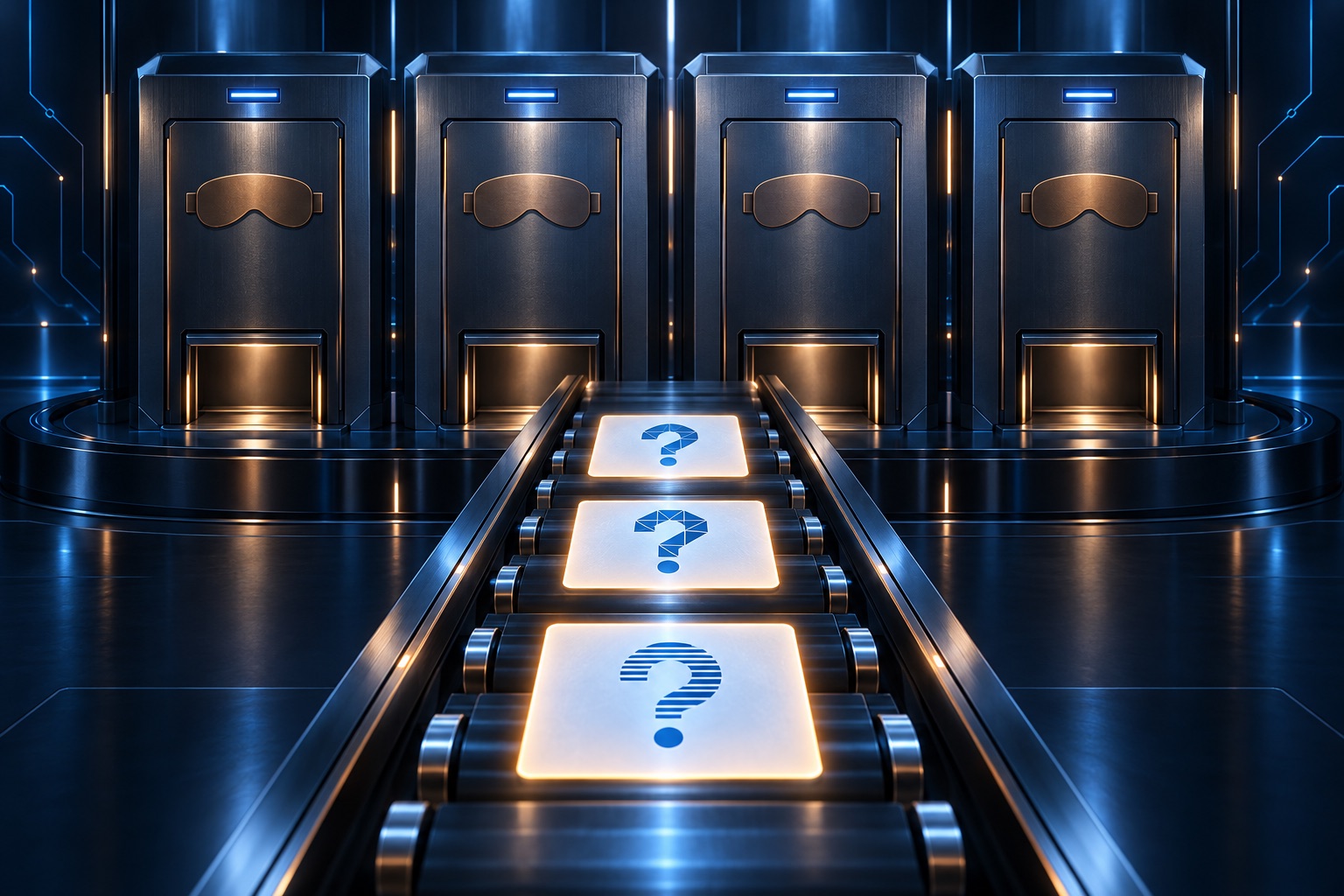 Three real questions went into four sealed, blind judging booths
We pulled three first-turn questions from Sherpa's own query logs, one from each of the three biggest things product marketers ask us about. Positioning and messaging alone is 27% of every question we see, then sales enablement, then PMM strategy.
- Positioning. "I lead product marketing for a complex solution in the SASE space. I need to find the best template for this: build clear, high-impact message houses that translate capabilities into business value for business decision-makers."
- Sales enablement. "Based on PMM best practices, what is a proven battlecard format for a small sales team that is trying to move to value-based selling from a transactional selling method?"
- PMM strategy. "Tips for product marketing team prioritization shifting from primarily product launch support to GTM positioning, messaging, and strategy support, while still maintaining launch enablement."
Each question went, word for word, to four advisors: PMM Sherpa (web app, no project attached), ChatGPT on GPT-6 with high thinking, Gemini 3.1 Pro, and Claude Opus 5.5 with high thinking. ChatGPT and Gemini ran in their consumer apps with the author's own Drive, inbox and notes connected, because that is how most marketers run them. Claude ran through the API, because the author's Claude app already has Sherpa connected and that would have contaminated the comparison.
Then the twelve answers were scored blind. Labels shuffled, product names removed, two judges from different vendors (Claude Sonnet 4.6 and GPT-6.1), three passes each, 45 scored judgments per system. The judges saw each answer as the app shows it, including Sherpa's source cards.
The rubric is the one a working marketer uses, not an AI leaderboard. Is it readable? Does it sound like a credible marketer? Is it grounded and relevant to my situation? Could I use the actions today? Is it concise enough to work with? Is it free of slop and invented facts? Is it specific? Does it take a position? How much editing before it goes in a doc?
Finally, the author scored all twelve answers on the same nine questions after using them in real work. The published score is the average of the blind AI panel and that hands-on review, equally weighted.
The scorecard
 Four advisors on nine spokes, one shape clearly larger on most of them
Scores out of 10, averaged across all three questions. Bold marks the leader.
| What a marketer asks | Sherpa | Claude Opus 5.5 | GPT-6 | Gemini 3.1 Pro |
|---|---|---|---|---|
| Is it readable? | 8.9 | 7.3 | 7.5 | 7.3 |
| Does it sound like a credible marketer? | 8.7 | 7.9 | 7.4 | 5.1 |
| Is it grounded and relevant to my situation? | 8.4 | 7.5 | 6.9 | 4.4 |
| Could I use the actions today? | 8.3 | 8.3 | 7.6 | 5.6 |
| Is it concise enough to work with? | 8.7 | 5.2 | 6.3 | 7.0 |
| Is it free of slop and invented facts? | 7.8 | 7.3 | 6.6 | 4.4 |
| Is it specific? | 7.3 | 8.0 | 7.3 | 5.3 |
| Does it take a position? | 8.8 | 7.5 | 8.1 | 6.4 |
| Could I paste it into a doc as is? | 6.6 | 7.8 | 7.1 | 4.4 |
| Overall | 8.2 | 7.4 | 7.2 | 5.5 |
| Reading time per answer | 3.0 min | 5.0 min | 3.8 min | 2.4 min |
Three things stand out.
Sherpa wins the categories that decide whether a busy marketer reads past the first screen. Readable, credible, concise, and willing to commit to a view. It is also the most grounded. On the blind AI panel alone, before the human review, Sherpa still led on the average of all nine dimensions (7.9 to Claude's 7.6, ChatGPT's 7.5 and Gemini's 5.8), so this is not a result the human layer manufactured.
Where the AI judges and the human reviewer disagreed, it was about length. The AI judges gave Claude the edge on "usable actions" because its answers were longer and more complete. The hands-on review scored it the other way, because a 1,200-word fill-in template is a project and a 600-word answer with the three decisions that matter is something you can act on before your next meeting. Averaged, it is a tie, and we are calling it one.
Grounded means something different when the corpus is curated. Claude and ChatGPT draw on the open web and whatever is in your connected files. Sherpa draws on a curated library of product marketing books, practitioner playbooks, and expert blogs, and shows you which ones it used. Every Sherpa answer shipped with source cards: seven on the message house, eight on the battlecard, four on prioritization. Claude named Force Management and April Dunford from memory. ChatGPT linked to Highspot and Klue. Gemini cited nothing checkable.
Question by question
 A message house, a 5x7 battlecard and a tiered roadmap on a desk
Message house for SASE. On the blind panel Claude took this one, and deserved it: a 1,281-word fill-in template with a narrative frame, a capability-to-metric translation ladder, and a persona overlay. If you want a document, that is the document. Sherpa took the opposite approach in 589 words. It opened by naming the actual problem: "almost every vendor claims the same outcomes. 'Simplified security.' 'Unified platform.' 'Zero Trust everywhere.' The words are interchangeable, and buyers know it." Then it gave a roof formula, three business pillars, a persona map for CISO, CIO, CFO and SecOps, and two disciplines most SASE message houses skip: replace vague claims with verifiable specifics, and build the "you don't have to rip and replace" story in, because most enterprise buyers are still mid-migration. ChatGPT recommended a template and, oddly, cited pmmsherpa.com as the place to get it. Gemini described a launch brief it found in the author's Drive, with tagline slots, and called it a message house.
Battlecard for a team moving to value selling. This is the one Sherpa lost outright on the blind panel. GPT-6 produced a worked one-page "playcard" with a value-math example. Claude built a twelve-section card on Force Management's Command of the Message. Both judges noted the same cost: "too much machinery for a small team." Sherpa scored highest on readability (9.0), credible voice and taking a position, and its 512 words contained the two lines a sales leader would actually repeat: "Design it to fit a 5x7 notecard. Literally." and "The battlecard is the artifact. The behavior change happens in the training session." One judge wrote: "Most readable and has a real POV." Where it fell short: it leaned competitor-first and skipped an explicit value-quantification step, which is the heart of the transition the asker described. Fair hit. Gemini invented a "Value-Consultative framework," told reps to say "our customers typically see a 3x ROI," and promised "100% data fidelity" in a sample script.
Shifting PMM from launch support to strategy. Sherpa won this outright on every panel: first on the blind judges (7.8 against ChatGPT's 7.2 and Claude's 7.0) and first on the hands-on review. It was also the cleanest answer in the whole test, and did it in 612 words where GPT-6 used 1,415. The judge's note: "Sharp, opinionated, reads like a senior PMM talking." The advice is the kind that only comes from people who have run the function. Tier your launches before the next one lands on your desk. Build a quick-wins bank to earn the right to do strategy. Make the strategic roadmap visible, because "if it's not on the roadmap, it doesn't exist to leadership." Pilot the "PMM owns strategy, the team executes" model on one Tier 2 launch before rolling it out. Claude's answer was strong on operating model but asserted that "most teams find 60 to 80% goes to reactive launch work" as if it were a finding. GPT-6 delivered a seven-section operating manual with a 90-day plan and a leadership memo, which is impressive and is also not what "tips" means.
The hallucination ledger
 A glowing framework on a pedestal that turns out to be hollow
The judges were asked to flag anything presented as fact that was invented or wrong. Of 15 scored judgments per advisor, Gemini was flagged on 10, ChatGPT on 8, Claude on 6, Sherpa on 5.
The flags are not equal. Gemini's were invented frameworks, invented ROI figures, and fabricated access to private files. ChatGPT's were invented personal context and false precision ("$7,800 in annual capacity value"). Claude's was an unsupported industry statistic. Sherpa's were an industry survey quoted in the answer without its link in the sentence (the link was in the research panel underneath), a loose "stone soup" attribution to a source that was in its cards, and one typo. No invented framework. No invented customer result. No invented access to anything.
There is a lesson in the Gemini and ChatGPT answers that goes beyond this test. Gemini opened with "I found a Go-to-Market Message House template in your Google Drive" and "an email in your inbox from Sharebird." ChatGPT told the author "your saved GTM Master Class notes already include a P1-P4 launch framework." Both judges flagged these as trust problems. The answers leaned on whatever private material happened to be connected instead of on marketing expertise. Sherpa had no access to any of it and did not need it.
Where the frontier models still win
We are publishing all twelve answers, so we will say it plainly.
If you want a long, fill-in-the-blanks document in one shot, Claude Opus 5.5 at high thinking produces the best one, and you will spend five minutes reading it. If you want a worked battlecard with the value math already sketched, GPT-6's was the most paste-ready. Both beat Sherpa on specificity and on how little editing the answer needs before it goes into a doc.
Sherpa's answers are built to be read on a phone between meetings and to tell you what to do and what not to do. The judges rewarded exactly that. They also dinged Sherpa for keeping its sources in cards instead of in the sentences, and for not laying its answers out as a finished, designed document. Both are on the roadmap. Citations in the prose ship next.
If your context already lives in ChatGPT, Claude or Gemini
 A curated library plugged securely into three chat apps
One result we did not expect. Before we moved Claude to the API for a clean comparison, we ran the test in the Claude app with the PMM Sherpa connector switched on. That configuration, Claude Opus 5.5 plus Sherpa's library, scored 8.3 on the blind panel. That is higher than any single advisor scored alone in that run.
So if your Drive, inbox and notes are already wired into a frontier chat app, you do not have to leave it. Bring Sherpa in through the MCP connector and you get the frontier model's depth with a curated product marketing library behind it. It is flexible, it is secure, and it takes about two minutes to set up.
Why this test, now
 A funnel of thousands of passages, a blue ring selecting the few that matter
Last week we shipped a reranker in front of Sherpa's 40,000-passage library. Every candidate passage is now judged against your actual question before a word of the answer is written. In our audit, that cut irrelevant material in the answer context from 55% to about 32% and lifted the share of on-point passages from 45% to roughly 70%. The three Sherpa answers in this test are what that looks like in practice.
Run your own test
Take the question you asked ChatGPT this morning and ask it at pmmsherpa.com. Then decide which answer you would forward to your VP.
Methodology. Queries are real user questions, lightly trimmed. Blind judges: Claude Sonnet 4.6 and GPT-6.1 via API, labels shuffled, three passes each, nine dimensions scored 1 to 10, with a flag for any invented or wrong fact. Judges saw each answer as its app presents it, including Sherpa's source cards and research panel. Human review: the author scored all twelve answers on the same nine dimensions after using them in work. Published scores average the AI panel and the human review equally. Reading time at 230 words per minute, including source cards. Sherpa run 21 October 2026, web app, default model, no project. All twelve raw answers and the judges' notes are available on request.